What is it about?
The Master's in Information Technology is unique because it prepares students for a professional and academic career. Interdisciplinary contexts are considered.
Profile of the study program
Information technology deals with questions such as
- How can M2M/M2H communication be further developed and how can the Internet of Things be designed?
- How do intelligent, autonomous systems work?
- What electronics will tomorrow's vehicles use?
- How are smart energy systems built?
Project-oriented, interdisciplinary and networked
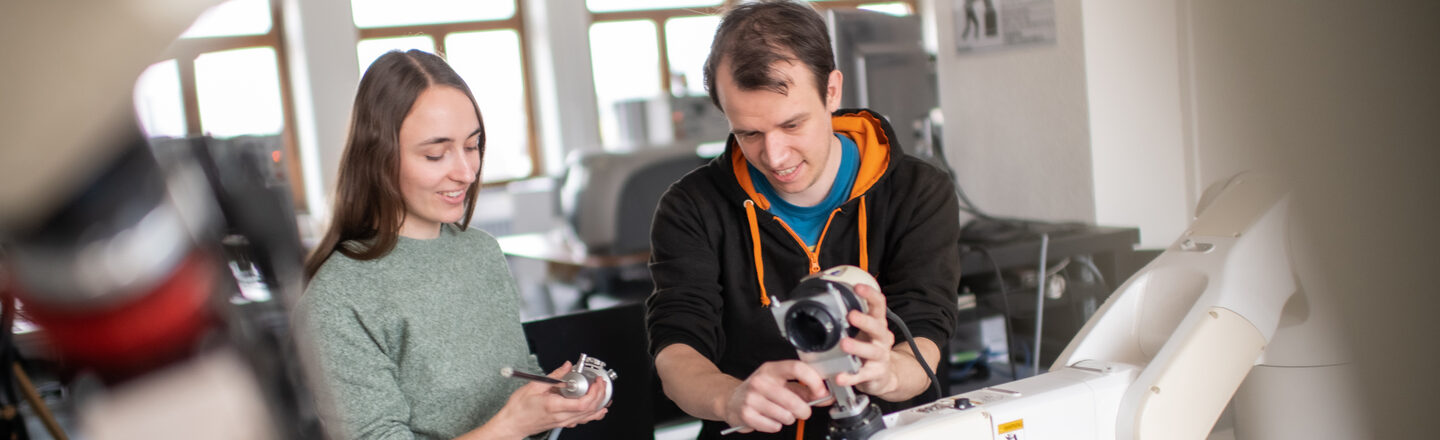
The course is application-oriented, project-based and interdisciplinary. The standard period of study is four semesters for full-time students and eight semesters for part-time students. In the first three semesters (full-time course) or six semesters (part-time course), the course includes both compulsory and compulsory elective modules and two project papers as well as a Master's thesis in the fourth semester (full-time course) or in the seventh and eighth semesters (part-time course).
In addition to advanced mathematics and theoretical electrical engineering, the compulsory modules cover communication technology, digital signal processing, AI systems and embedded systems. Generally applicable information technology concepts are taught and illustrated using the example of innovative applications with an interdisciplinary character.
In the compulsory elective modules, you will delve deeper into specific topics or areas. Possible areas of specialization include machine learning methods, robotics, human-machine interfaces or (supplementary). In the project work, you will work independently, but in competent and committed teams, on topics of your choice. The course concludes with the Master's thesis in the fourth semester (full-time course) or in the seventh and eighth semesters (part-time course). The thesis can be carried out as part of a research and development project or in cooperation with Business Studies.
The Ruhr Master School
The Ruhr Master School (RMS) offers you additional opportunities to sharpen your profile. The RMS bundles and networks the expertise of the Fachhochschule Dortmund, Bochum University of Applied Sciences and Arts and the Westfälische Hochschule in Gelsenkirchen in the fields of engineering and computer science. International project-oriented components, summer schools and specialist conferences complement these offerings.
Master of Science and a wide range of career opportunities
After successfully completing the course, you will graduate with a Master of Science (M.Sc.) degree.
Specializations in the study program
Information Technology offers specializations in the following areas:
- Communication technology
- Digital signal processing
- AI systems
- Embedded system
Course of study - full-time / 4 semesters
This is a thematic overview of the course content. Detailed information on the exact names of the courses, information on ECTS or semester hours per week can be found in the examination regulations and in the module handbook.
| 1st semester | Mathematics | Theoretical electrical engineering | Communication Technology | Digital signal processing | AI systems | Embedded Systems | Compulsory elective module | Project work |
| 2nd semester | Mathematics | Theoretical electrical engineering | Communication technology | Digital signal processing | AI systems | Embedded Systems | Compulsory elective module | Project work |
| 3rd semester | Master's thesis | Compulsory elective module | ||||||
| 4th semester | Thesis & colloquium | Compulsory elective module |
Course of study - part-time / 8 semesters
This is a thematic overview of the course content. Detailed information on the exact names of the courses, information on ECTS or semester hours per week can be found in the examination regulations and in the module handbook.
| 1st semester | Mathematics | Theoretical electrical engineering | Communication Technology | Digital signal processing | AI systems | Embedded Systems | Compulsory elective module | Project work |
| 2nd semester | Mathematics | Theoretical electrical engineering | Communication technology | Digital signal processing | AI systems | Embedded Systems | Compulsory elective module | Project work |
| 3rd semester | Mathematics | Theoretical electrical engineering | Communication Technology | Digital signal processing | AI systems | Embedded Systems | Compulsory elective module | Project work |
| 4th semester | Mathematics | Theoretical electrical engineering | Communication Technology | Digital signal processing | AI Systems | Embedded Systems | Compulsory elective module | Project work |
| 5th semester | Master's thesis | |||||||
| 6th semester | Master's thesis | |||||||
| 7th semester | Thesis | |||||||
| 8th semester | Thesis & colloquium |
Video - a student guides you through the faculty
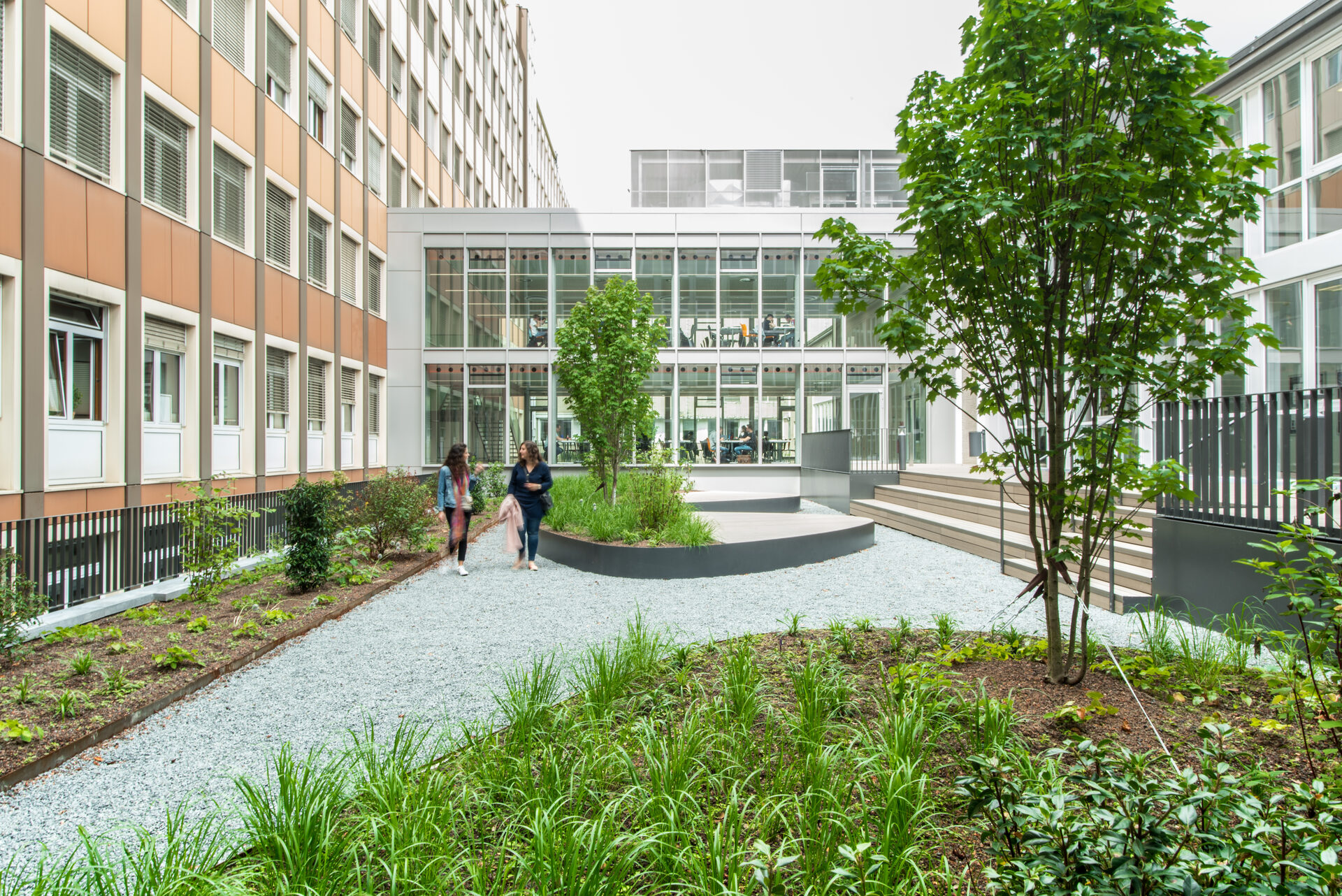
Why study at Fachhochschule Dortmund?
What makes Fachhochschule Dortmund special? What should you know about the city and the region? How is Fachhochschule Dortmund positioned in terms of internationality and what counseling and support do we offer you? Find out more about Fachhochschule Dortmund.
Who is it for?
Desirable subject-specific and interdisciplinary knowledge
Do you find network architectures exciting? Does interdisciplinary work appeal to you? Are you team-oriented and responsible? Then the Master's degree program in Information Technology may be the right fit for you.
Prospects after graduation
Career prospects
Those who have a degree in this study program often work in
- energy companies
- software/application development
- automation technology
- Information and communication technology
Cooperative doctorate
The Master's degree is the basis for a doctorate. Graduates who wish to gain further academic qualifications have the opportunity to do a doctorate at a university. This is possible via a cooperative doctorate, in which the university of applied sciences is a cooperation partner of a university.
Stay abroad possible during your studies
What do I need?
1. required degree
The Master’s study program in Information Technology is open to all applicants; however, there are admission requirements that must be met.
- To be admitted to the Master’s program, applicants must have earned a Bachelor of Science, a Bachelor of Engineering, or a Diplom-Ingenieur degree from a university of applied sciences or a university, or from an accredited Bachelor’s program in digital technologies at a vocational academy. This includes degrees
- in Digital Technologies or
- Biomedical Engineering, or
- information and communication technology, or
- Information Technology, or
- Technical Computer Science or
- Electrical Engineering or
- a bachelor’s study program in the natural sciences or engineering with comparable content, or
- a degree program marked accordingly in the transition matrix from bachelor’s to master’s programs at the Ruhr Master School of Applied Engineering (see subsection 3).
- The decision as to whether a study program is classified as comparable in content is made by a three-member committee consisting of the program director and two other individuals from among the professors in the Faculty of Information Technology.
- The Faculty Council of the Faculty of Information Technology determines which Bachelor’s degree study programs at the Ruhr Master School provide access to the Master’s degree program in Information Technology. These are indicated in the Ruhr Master School’s transition matrix. The transition matrix is accessible via the program finder on the Ruhr Master School’s website.
- The study programs referred to in subsection 1 must have a standard duration of at least six semesters or 180 ECTS credits.
2. register now!
The study program starts annually in the summer and winter semesters and is admission-free.
Who can help me?
We will be happy to answer any questions you may have about the study program and Fachhochschule Dortmund.
Central Student Advisory Services (ZSB)
Contact with students
Admissions office
Registration office team
bewerbungfh-dortmundde