


The hall at the Family Institute on the Kinderhaus(Opens in a new tab) campus was well attended when, on November 5, 2026, approximately 90 participants gathered in Berlin for the ElSe project’s workshop conference. Participants included parents as well as professionals and administrators from child and youth welfare services, youth welfare offices, representatives from ombudsman offices, disability services, and academia. It was precisely this unique mix that shaped the day and allowed for a diversity of perspectives on a shared topic.
Collaborative Project with the IGfH
The “Child Welfare Services—Not Without Us! ” Project A project to provide funding for parent self-organization in inclusive child and youth welfare (ElSe)(Opens in a new tab) by the International Society for Educational Assistance (IGfH) and the Faculty of Applied Social Studies supports and facilitates the establishment of parent self-advocacy groups within the educational assistance system at four locations (Berlin, Dresden, Düsseldorf, and Böblingen) the establishment of parent self-advocacy groups within child and youth welfare servicA project to provide funding for parent self-organization in inclusive child and youth welfare (ElSe)(Opens in a new tab) by the International Society for Educational Assistance (IGfH)(Opens in a new tab) and the Faculty of Applied Social Studies(Opens in a new tab) supports and facilitates the establishment of parent self-advocacy groups within the educational assistance system at four locations (Berlin, Dresden, Düsseldorf, and Böblingen) the establishment of parent self-advocacy groups within child and youth welfare services.
The workshop conference provided an opportunity to reflect on the developments of the project year and to share the experiences gained so far at the various locations with an interested audience.
Presentation of the Results of the Scientific Monitoring
Prof. Dr. Nicole Knuth (Fachhochschule Dortmund) and Prof. Dr. Hans-Ullrich Krause (Director of the Family Institute at Kinderhaus Berlin-Mark Brandenburg) presented the findings of the scientific evaluation and highlighted key challenges, such as recruiting parents and providing support to parent groups by professionals. These findings serve as a starting point for discussing further developments. In four working groups and a panel discussion moderated by Prof. Remi Stork (University of Applied Sciences Münster), these findings were further explored in dialogue with parents and professionals and contextualized within the framework of current youth welfare structures.
Parent advocacy groups don't just spring up on their own
It became clear that parent self-advocacy groups can emerge, but they do not emerge on their own. It takes parents who contribute their experiences, professionals who create spaces for this, and funding agencies and youth welfare offices that view the mandate under Section 4a of SGB VIII as a shared responsibility. Last but not least, the conference demonstrated how confidently and helpfully parents contribute their perspectives when given the opportunity to do so. Especially in the working groups, they enriched the discussion with their experiences from the project year. The parents made it clear that self-help and self-advocacy are not opposites. It was only by taking the time for personal exchange that the trust was built upon which joint advocacy is founded. One mother summed up her experience in a single sentence: “We always leave the meetings feeling empowered and finally have the sense that we have a voice.”
To ensure that Section 4a of SGB VIII does not remain merely on paper, more knowledge is needed about key success factors and challenges. An application was therefore submitted to continue the project so that the parent groups can be supported and studied for two more years.
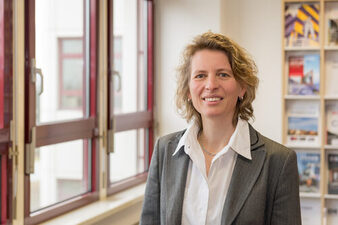
Prof. Nicole Knuth, Dr.
- +49 231 91124911
You can find my office hours here: https://www.ilias.fh-dortmund.de/ilias/goto_ilias-fhdo_prtf_1369623_1783.html
You will automatically receive the link to the video conference as an appointment confirmation by e-mail.
Please send me the necessary documents 1-2 days before the appointment (please include your name, request and date of the appointment).