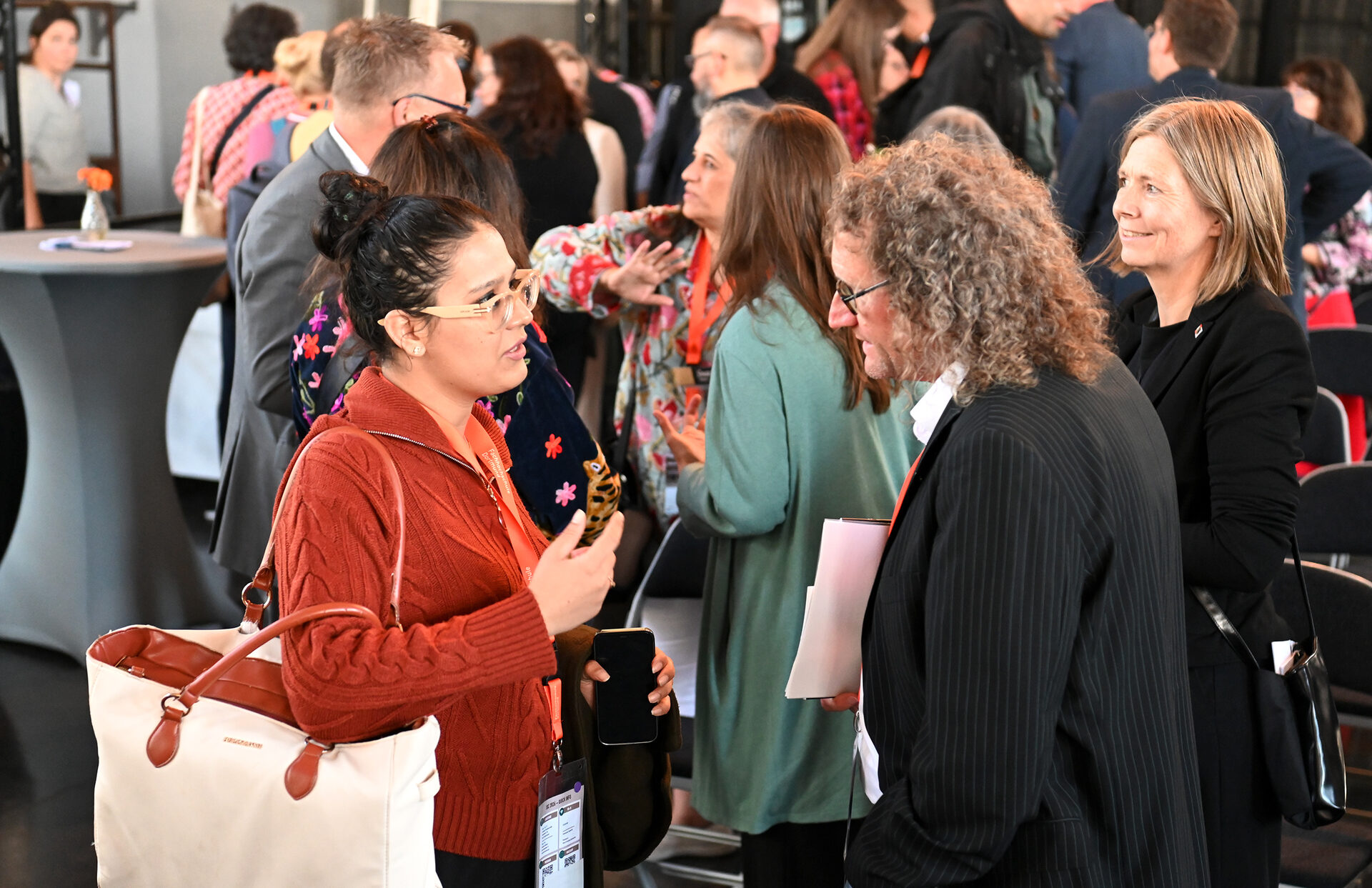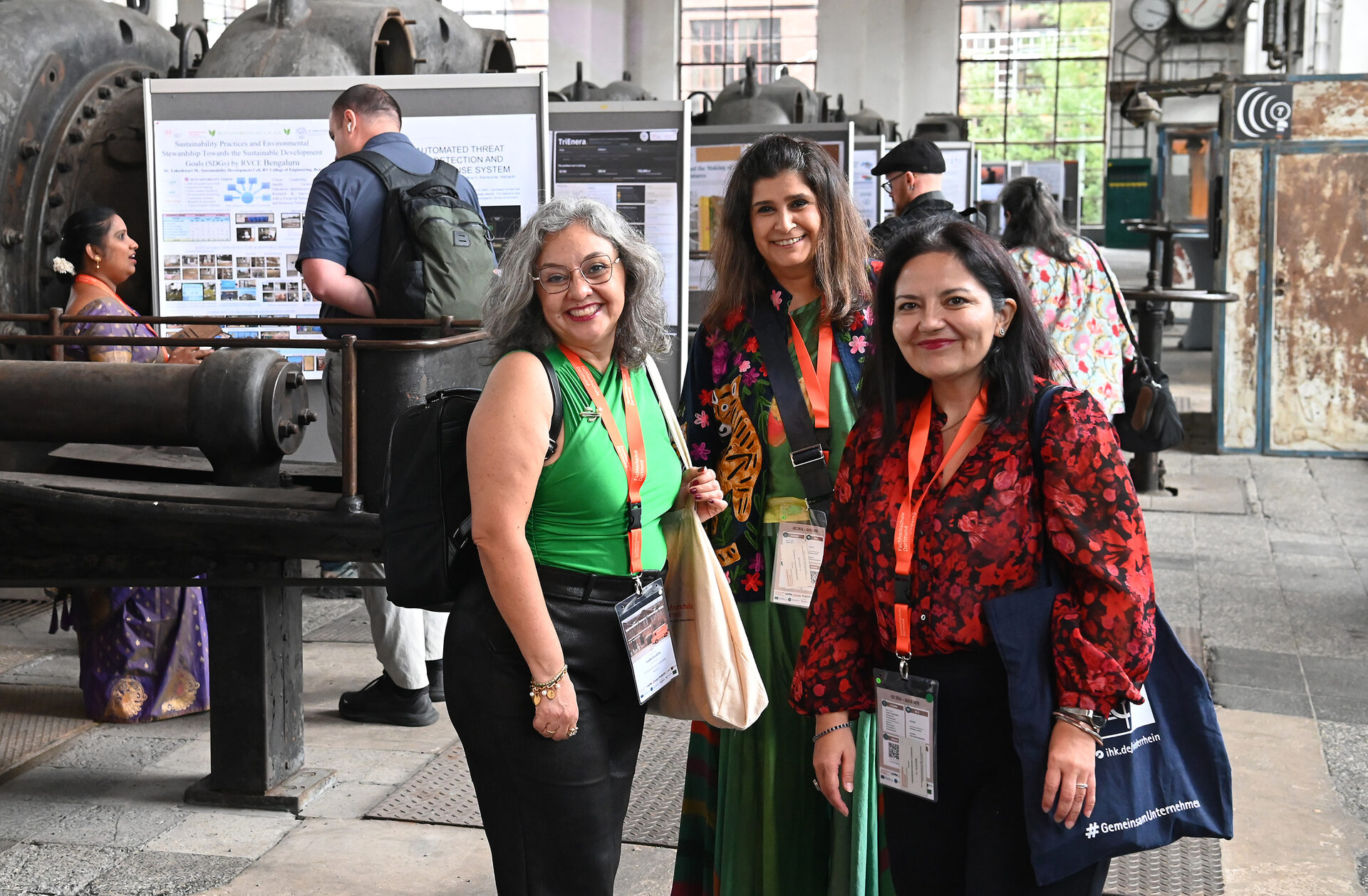

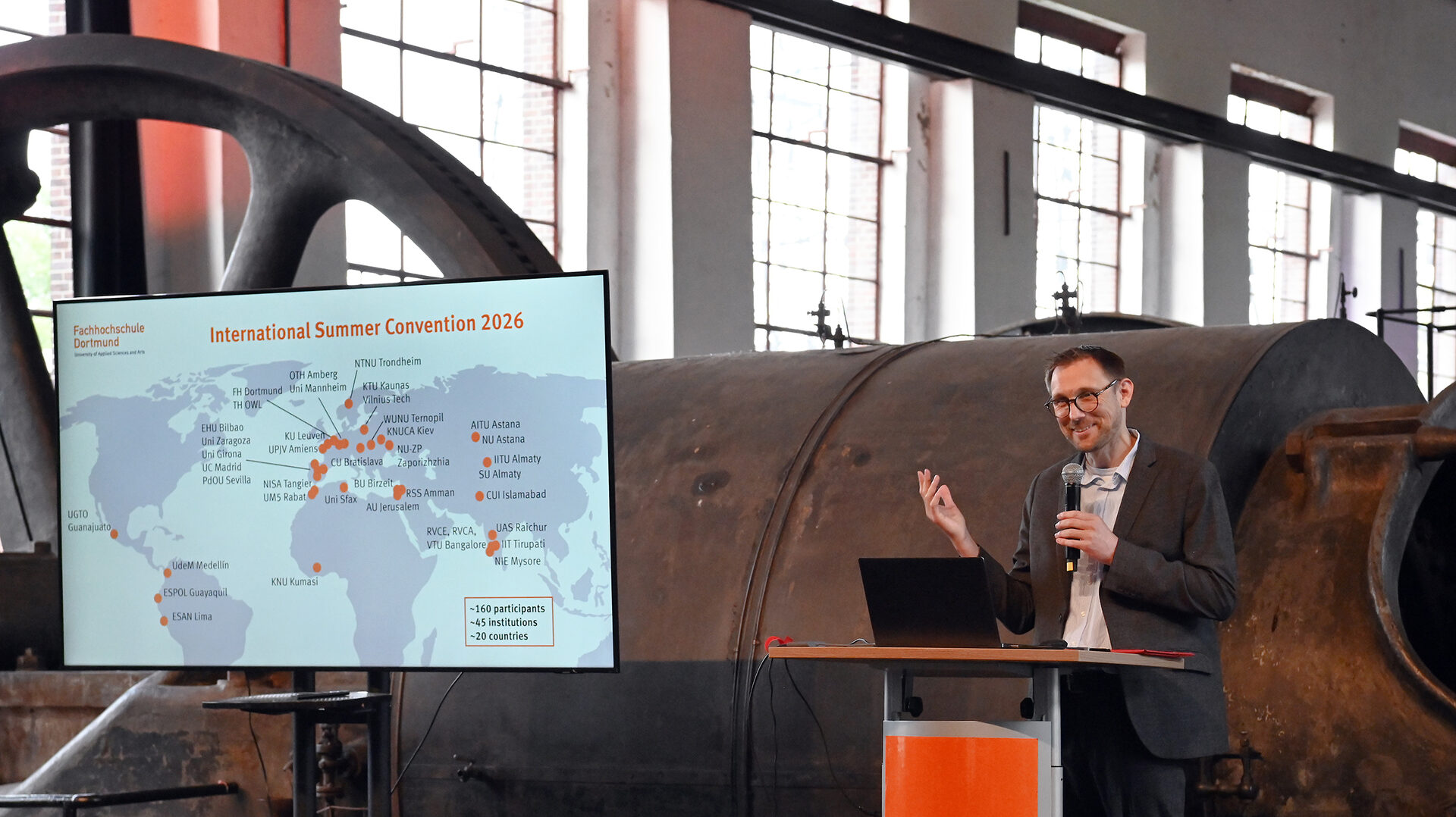
From September 14 to 18, 2026, Fachhochschule Dortmund once again became a global hub for science and education. The third International Summer Convention brought together 160 guests from 20 countries.
Against the backdrop of the historic compressor hall at the Hansa coking plant, new networks were forged and research partnerships were strengthened. Representatives from 50 partner institutions around the world—from Colombia and Ukraine to Ghana and India, and on to Norway and Spain—took advantage of the International Summer Convention (ISC) at Fachhochschule Dortmund for in-depth exchanges. What began three years ago with about 70 participants has become a fixture at Fachhochschule Dortmund.
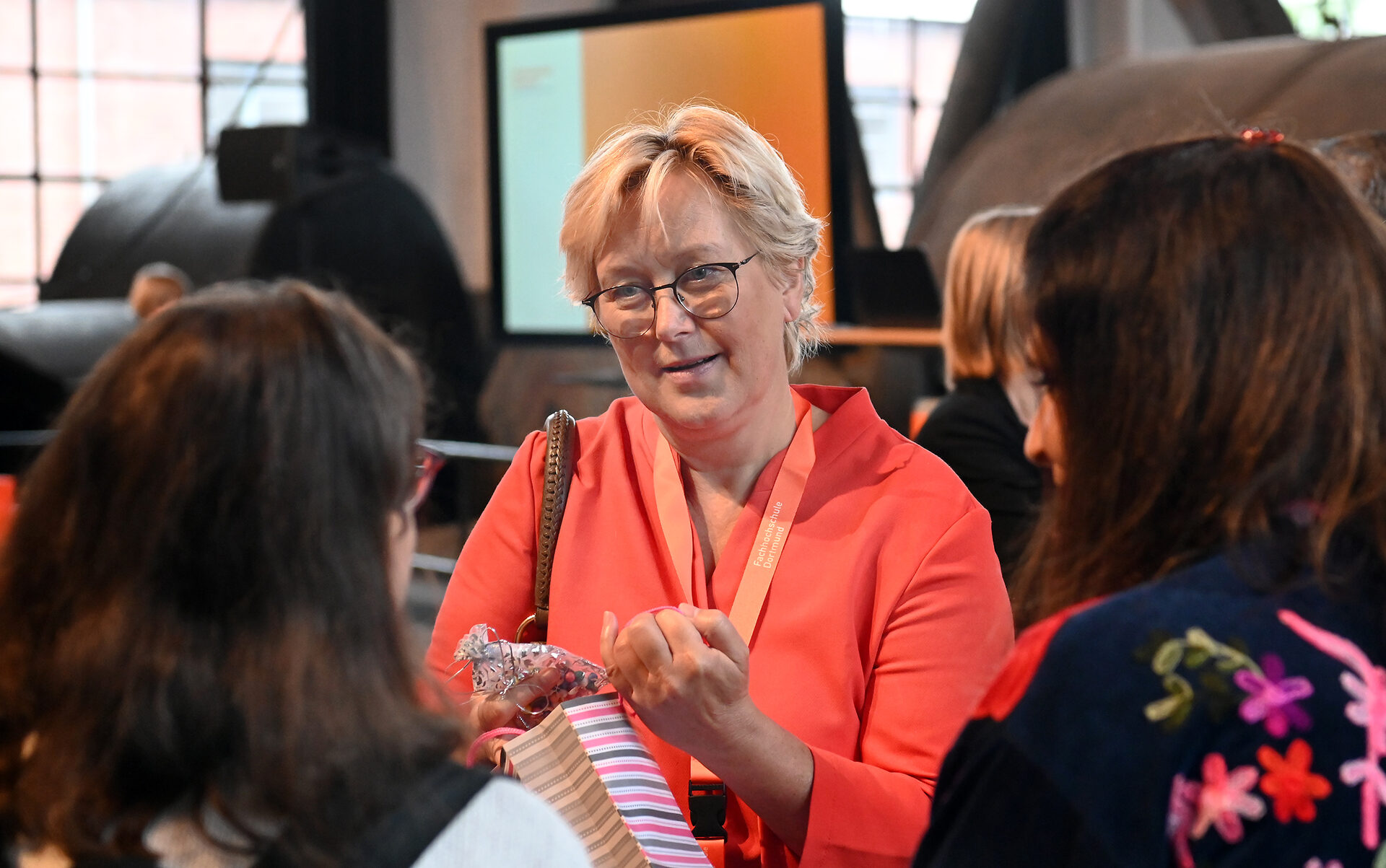
Against the backdrop of global uncertainties, Rector Prof. Dr. Tamara Appel emphasized the special responsibility of academia in her opening remarks: “In a world where borders seem to be gaining importance again and trust is dwindling, universities have a clear duty,” the university rector stressed. “We are places where people come together. Here, we can learn from one another and build bridges.” International collaboration, she noted, is by no means a luxury but a necessity. “When we welcome international students and researchers, we are also investing in our own future,” said Professor Appel.
An Anchor for Global Networks
The program combined practical instruction and research: It ranged from workshops on artificial intelligence in education and the “ORCAthon 2026” for digital teaching materials to research matchmaking sessions and lab tours.
For the Fachhochschule Dortmund, the International Summer Convention serves as a central hub for long-standing partnerships. “The basic idea was to create a central anchor event for all of our international projects,” explained Prof. Dr. Stephan Weyers, Vice Rector for Teaching, Academic Affairs, and International Relations. Whether it’s the European project management network EuroPIM, collaboration with Ukrainian partner universities, or new Erasmus+ initiatives—the ISC brings it all together. “Internationalization doesn’t happen on the sidelines here,” Weyers clarified. “It is at the core of our identity as a university.”
Research Needs a Compass
In addition to expanding teaching and study programs, the focus was on the societal impact of applied research. Research needs a compass, emphasized Prof. Dr. Michael Boecker, Vice Rector for Research and Knowledge Transfer, in his keynote address. In light of global crises, he said, research must constantly ask how it can tangibly improve people’s lives. “We must remain vigilant about what burdens people and commit ourselves uncompromisingly to educational equity and equal opportunity,” said the Vice Rector. Science begins with curiosity—and this must be harnessed to assume social responsibility.
So what remains from these five days in Dortmund? In addition to notes from the workshops and keynote speeches, above all the tangible experience of being part of a global network. Participants are taking home numerous new project ideas, fresh research approaches, and the anticipation of meeting again next year.