

Fachhochschule Dortmund has been a scientific partner of numerous civil society organizations in the city for many years. The annual Conference of Social Responsibility focuses in particular on the exchange between science and commitment. But the contact also remains lively in everyday life - among other things through regular visits to the partner NGOs.
On December 12, Sebastian Kreimer from the Fachhochschule Dortmund CSR Office and Leonie Hogefeld from the AStA Sustainability Project Office made their way to the Dortmunder Tafel. Sebastian Kreimer describes his impressions here:
As soon as you enter the premises of the Dortmunder Tafel, it becomes clear that a lot of heart and soul goes into the daily work here. The building, a lovingly restored former mining laundry, looks like a lively meeting place. A large decorated Christmas tree shines in the inner courtyard while employees busily sort through boxes and cartons. Next door, a small group is receiving German lessons and the social workers at the food bank are discussing current cases - including a Fachhochschule Dortmund graduate who has taken up her first job here.
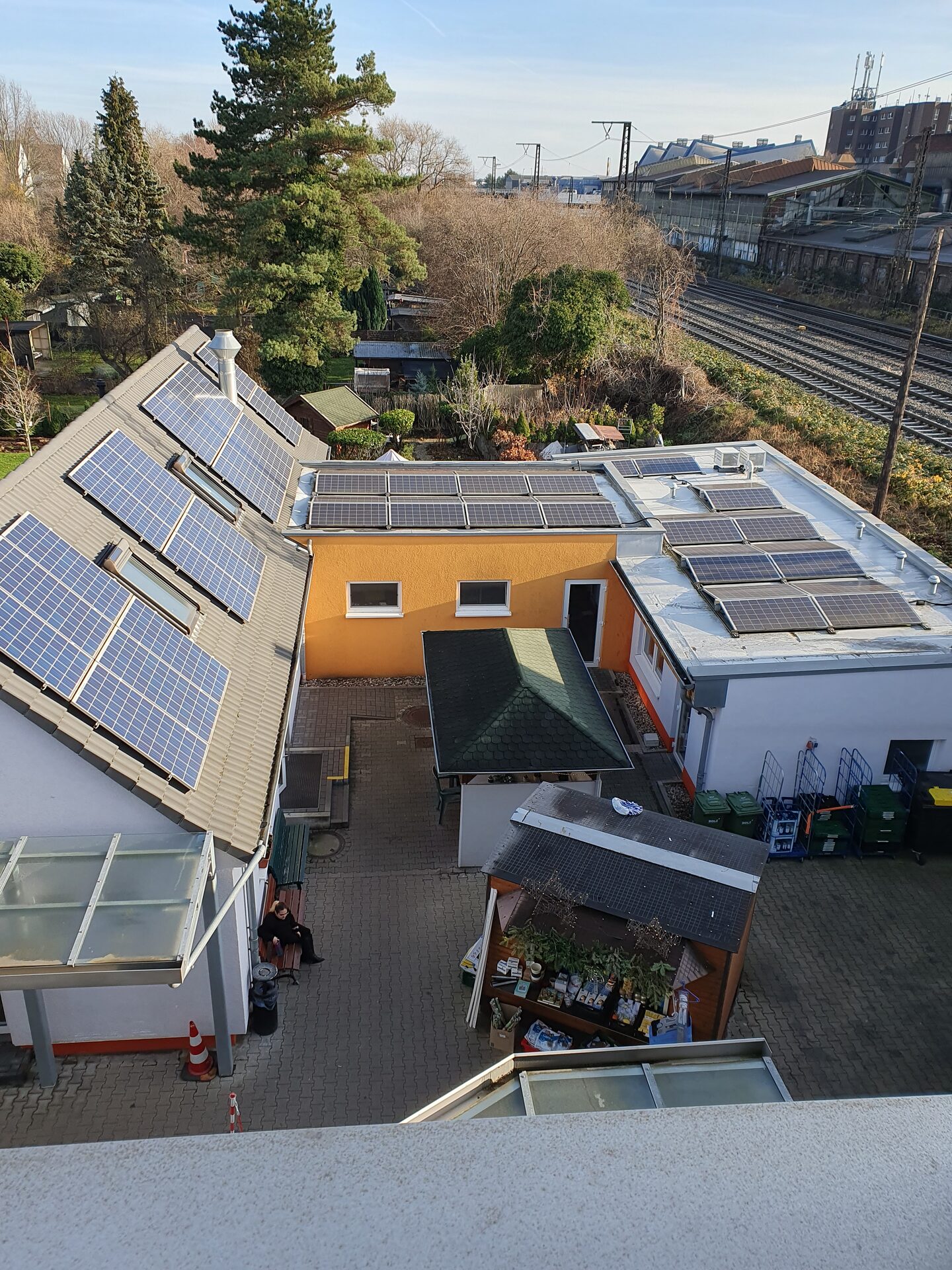
Sustainability that you can see
I am also particularly impressed by the board's commitment to ecological sustainability. Rainwater management, photovoltaic systems on all available roof surfaces and a large garden with raised beds, fruit trees and honey bees: The food bank thinks far beyond the mere distribution of food. Even its own biogas plant is already being discussed - an exciting field for future cooperation with the university.
Logistics at a high level
Around 400 employees ensure that food that would otherwise end up in the bin finds its way to people. With 15 vehicles, including two 16-ton trucks, the Tafel not only drives to local supermarkets, but also to national producers. This is because modern AI programs mean that retailers have less and less surplus left over. At the same time, the team is also on the road with cargo bikes - for example for the "Kauf ein Teil mehr" campaign, which draws the attention of many Dortmund residents to the work of the Tafel.
Today, the Tafel has ten distribution points in the city. More than 5,000 households - around 15,000 people - regularly make use of the service. Students can also receive benefits, provided they receive BAföG and do not exceed certain income limits. The Tafel provides information and applications transparently online.
More than just distributing food
The main location not only sells food: customers can buy goods at a discount from large logistics centers such as Amazon or Tedi. The proceeds make a significant contribution to financing the Tafel's work.
The Dortmunder Tafel also offers a broad program for children and young people - from leisure activities and homework help to gardening clubs. Thanks to committed sponsors, special events such as participation in a BVB soccer camp are even made possible. Employees are also catered for: in the in-house canteen, donated food is turned into meals for more than 100 people every day.

Outlook: Moving more together
The visit showed impressively how many opportunities there are for cooperation between Fachhochschule Dortmund and Dortmunder Tafel. Whether in research issues, sustainable projects such as the planned biogas plant or the placement of students as volunteers - there is plenty of potential.
For all those who would like to attend the next visit: There will be another date in 2026. Anyone interested can already register now at csr-officefh-dortmundde . A visit that inspires - and makes you want to get involved together.