

Joining forces to drive development towards global sustainability: For two days, representatives from science, practice, society and politics discussed how this can be achieved at Fachhochschule Dortmund.
Researchers from the University of Johannesburg and the University of KwaZulu-Natal, both in South Africa, as well as Midlands State University in Zimbabwe, came to Fachhochschule Dortmund at the beginning of November at the invitation of Fachhochschule Dortmund lecturers Prof. Dr. Michael Boecker and Dorothée Boecker. The aim was to create a lively space for exchange and networking in order to develop joint strategies and paths for global sustainable transformation and to discuss experiences and ideas in the context of the 17 UN Sustainable Development Goals (SDGs).
The cooperation between UAS lecturers Prof. Dr. Michael Boecker and Dorothée Boecker and the three African universities, funded by the German Academic Exchange Service (DAAD), made this conference possible. "It was important for us to focus on interdisciplinary cooperation, as this is the only way to tackle the complex goals of the SDGs," explains Prof. Boecker. "It's about networking different stakeholders, who then develop programs, concepts and research activities and align them with the goals of the SDGs." Research activities such as the production of solar energy in Pakistan, for example, which, according to Prof. Boecker, "can make a real difference for local people".
Networking young talent
"We have also lived up to our claim," says Dorothée Boecker, "to network young researchers. In addition to the official program activities, this young generation is also in lively exchange, publishes together or exchanges ideas on specific projects." The conference was part of a ten-day program for students, during which doctoral students from African universities also visited and got to know specific projects in Dortmund.
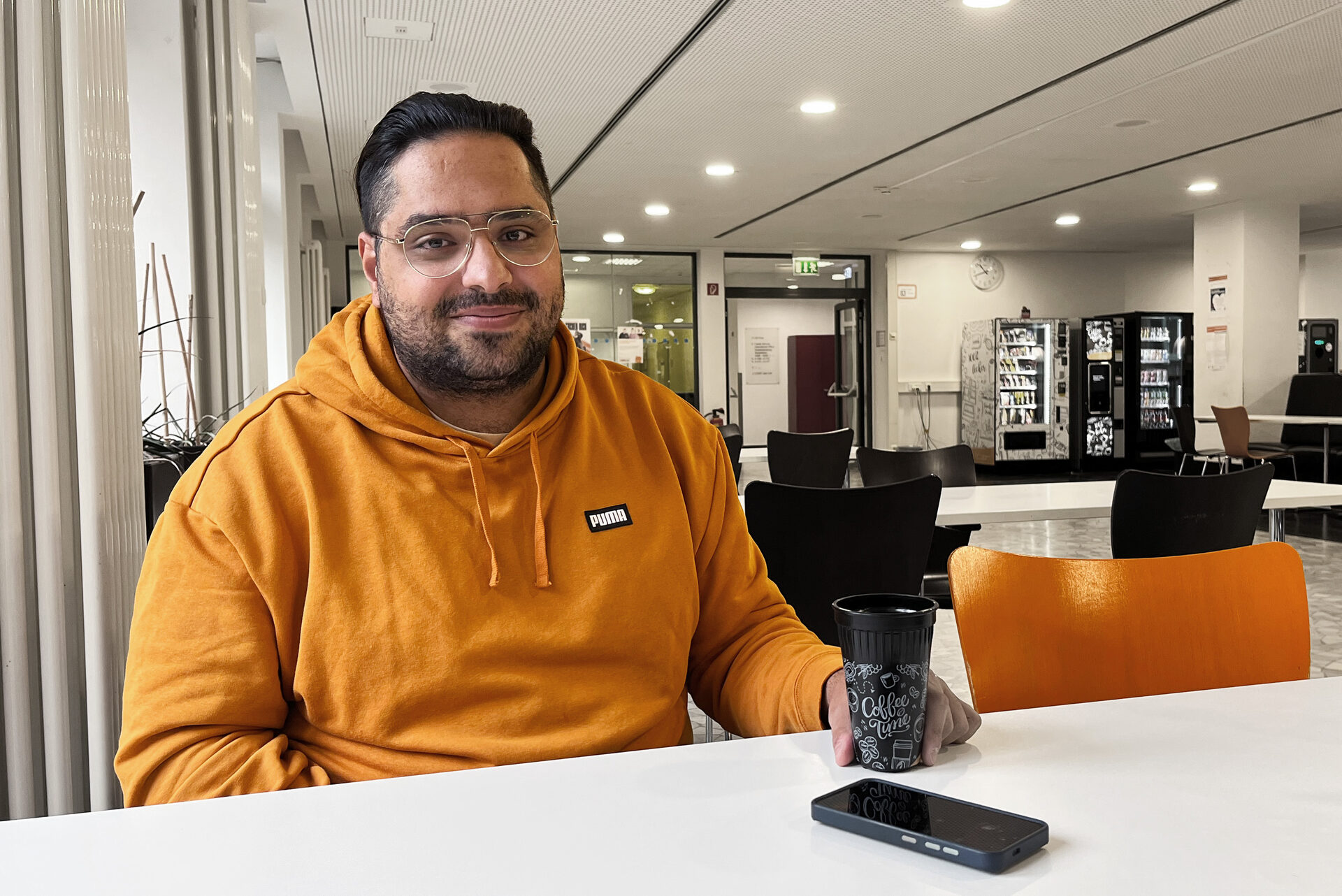
Bilal Eter was one of two UAS students who took part in this year's exchange program for doctoral students and travelled to Johannesburg, South Africa, for four weeks in October. As a Master's student on the "Social Sustainability and Demographic Change" study program, he was given the opportunity because a place had become available. Bilal Eter works as a social worker alongside his studies and spent his annual leave and all his accumulated overtime on the trip.
"Crash course for doctoral students"
In terms of content, it was a "crash course for doctoral students, you could say". He learned a lot from the African doctoral students. For example, how much time a doctorate takes (according to statistics by sociologist Aladin El-Mafaalani, four to ten years) and what this means in practical terms in everyday life and that it requires a lot of perseverance and close contact with the doctoral supervisor or doctoral supervisor's mother.

He has also gained new perspectives. People are amazingly friendly, "in the supermarket, in the hostel, they ask 'Hello, how are you' and really mean it." Once in a mall, the security guard approached him and very kindly advised him to put his cell phone away, otherwise it could be stolen.
A lot of commitment despite little money
He visited NGOs whose employees demonstrate enormous commitment, even though - or because? - they live in very simple houses, the size of a garden shed and sparsely furnished, while the city's rich live in luxury.
He also hoped to gain his own perspective for his own master's thesis on post-growth, i.e. the question of what could replace the current growth-oriented economic system. "I was encouraged that as many perspectives as possible need to be brought together for such a global topic."
Would he go back, even in exchange for annual leave and overtime? Yes, he says. The people he met there have already invited him back.
Major NGO congress in South Africa
The next one-month stay for doctoral students is scheduled for April 2026 in Harare, Zimbabwe. A major NGO congress in Durban, South Africa, is also planned as the final event of the current funding phase. There, more than 80 representatives of non-governmental organizations will be able to exchange ideas with the scientific community and ensure a future transfer of theory and practice - also for new projects.
To the conference
The delegations of the DAAD partner universities were guests, represented by
- Prof. Dr. Tanusha Raniga from the University of Johannesburg (South Africa)
- Dr. Maud Mthembu from the UKZN in Durban (South Africa)
- Dr. Mildred Mushunje from the Midlands State University in Harare (Zimbabwe)
- Dr. Noel Muridzo from Midlands State University in Harare (Zimbabwe)
The participants paid particular attention to these topics:
- global and local action strategies to implement the SDGs
- Cooperation between universities, NGOs and local partners
- innovative micro-projects and individual contributions from students and researchers
- interdisciplinary perspectives on social work and related disciplines