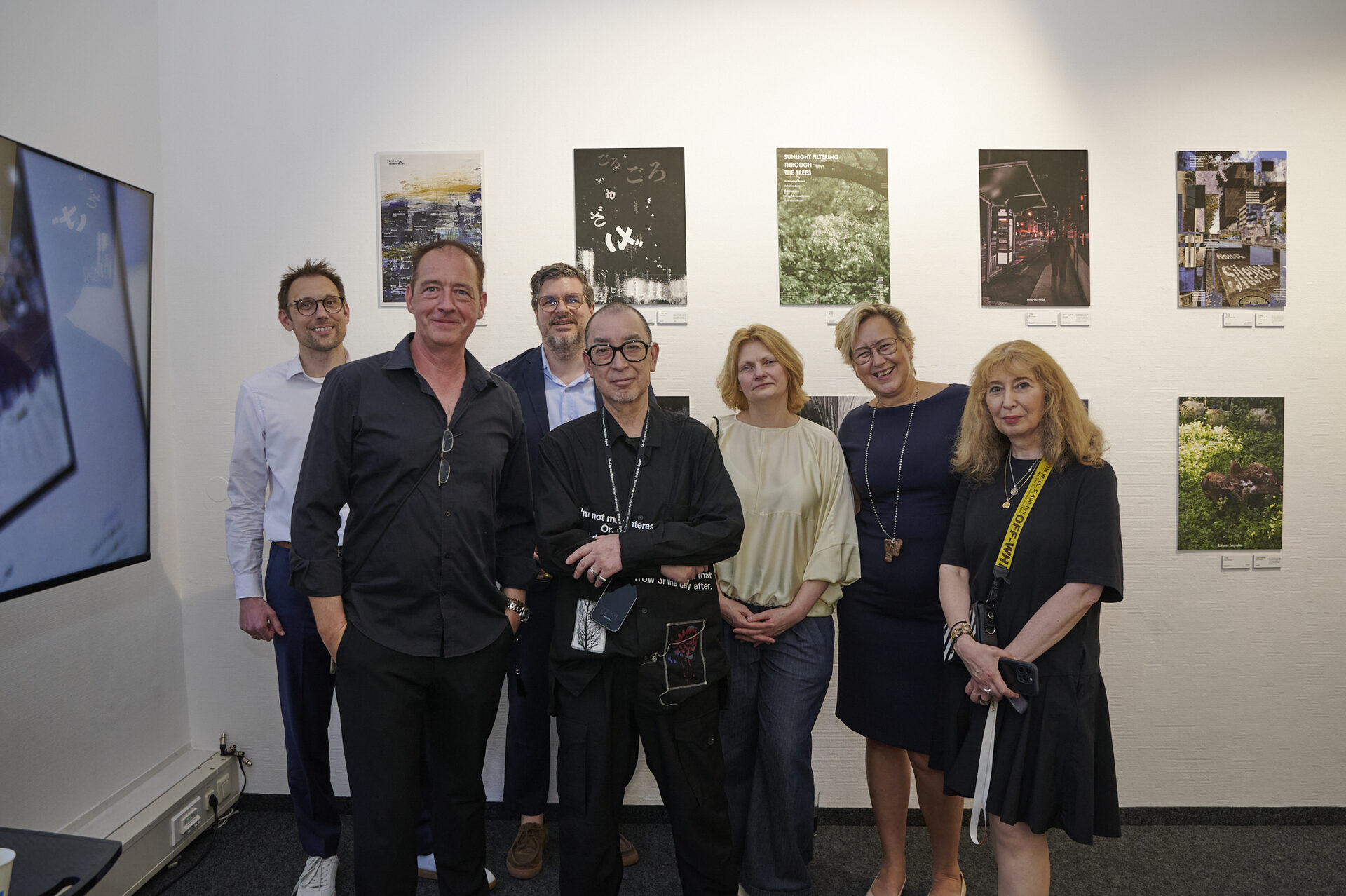

The exhibition “Noise & Silence in Everyday Life” features works by students from the University of Applied Sciences and students from Japan. In an interview, co-organizer Prof. Andreas Pawlitzki describes how this cultural collaboration has “sparked dialogue.”
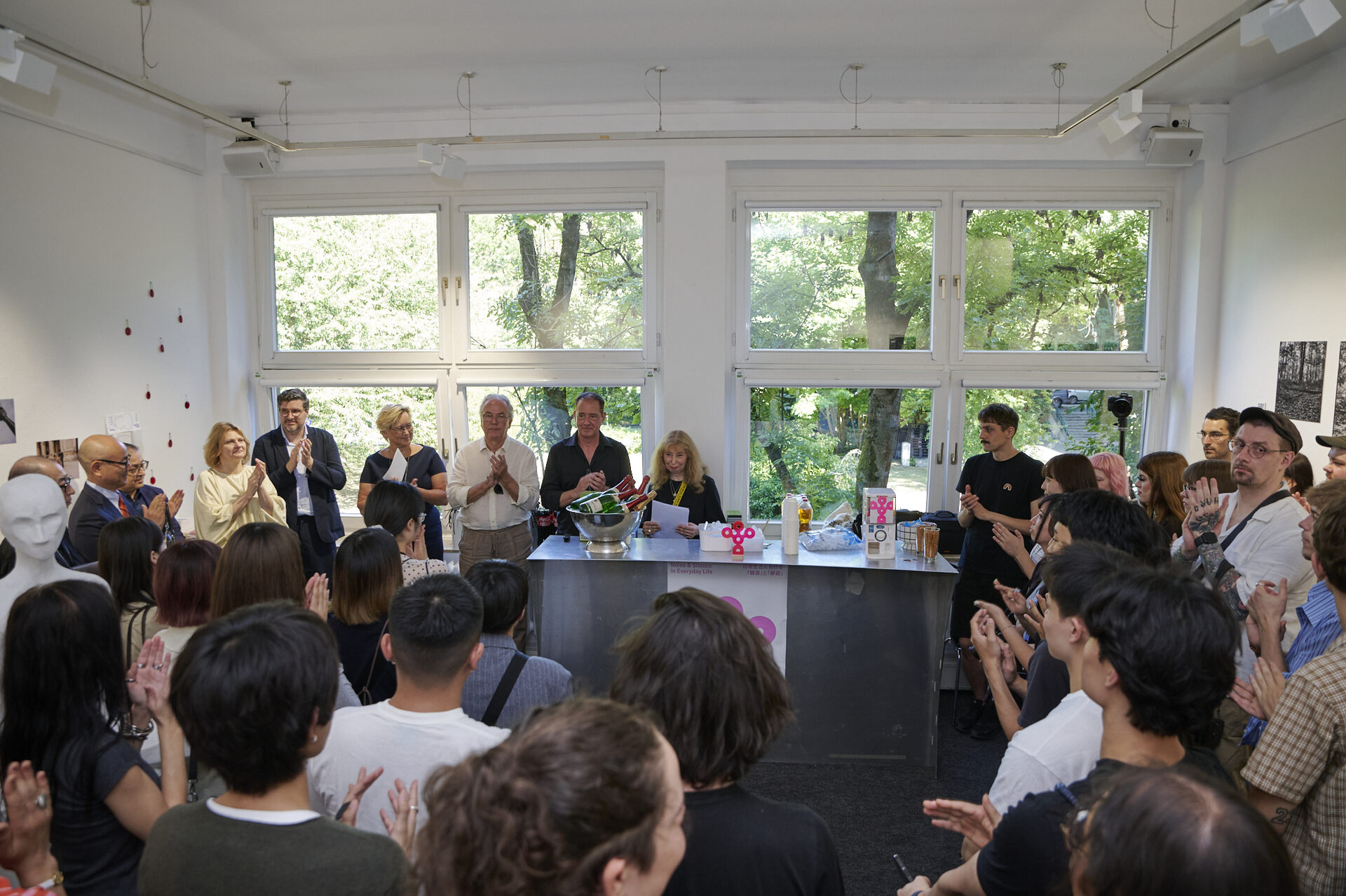
Far more people attended the opening reception in the Faculty of Design’s gallery at the Max-Ophüls-Platz location in late July than the space could accommodate, because not only was the exhibition itself remarkable, but so was the process of bringing it to fruition. Prof. Andreas Pawlitzki, associate dean of the faculty and—alongside Prof. Dr. Lioudmila Voropai and Prof. Jens Müller from Fachhochschule Dortmund and Prof. Hidezumi Kadowaki from Osaka Seikei University—one of the organizers and lecturers involved in developing the exhibition, discusses this.
Prof. Pawlitzki, what was the assignment for the students?
Prof. Hidezumi Kadowaki of Osaka Seikei University introduced us to the topic “Noise & Silence in Everyday Life” as a cross-cultural issue, and we were immediately captivated by it. It was clear to us that this topic offers great potential for a multifaceted artistic and social exploration. Engaging with the concepts and experiences of silence and noise is particularly important for young people, as they are closely linked to how we interact with our living spaces, resources, and an environment increasingly shaped by noise and information.
Our aim was to draw on the broad artistic spectrum of our faculty and to facilitate diverse creative approaches to this complex subject area. Through the diversity of media and forms of expression used, “Noise & Silence” was intended to be experienced from various perspectives and to create a space for individual interpretations and intercultural exchange.
A partnership with a Japanese university is a rare opportunity, isn't it?
Yes, universities in Japan are highly sought-after partners, and simply establishing contact and developing a reliable collaboration doesn’t happen overnight. Added to that were the physical distance, the time difference, and the language barrier. This makes it all the more gratifying that the collaboration has worked so well.
Our colleagues Prof. Dr. Lioudmila Voropai, Prof. Jens Müller, and our highly esteemed colleague Prof. Kadowaki all contributed equally to this success. A project like this can only work if there’s good chemistry among everyone involved. In our case, that chemistry was spot on. And it was also fun to observe the teaching methods of the Japanese lecturers.
In what way?
Our seminars took place simultaneously in a large shared seminar room. For our students, the Japanese partners’ highly disciplined yet well-structured teaching and work methods were a particularly exciting experience. In addition, we met online four times during the Japanese classes, and there, too, the Japanese instructors were very organized, meticulous, and exceptionally well-prepared.
How is that evident?
This becomes particularly clear in the presentation of the Japanese works. All works were printed in a uniform format and hung according to a clearly defined grid. In addition, the projects were presented in their entirety in standardized book formats. This consistent form of presentation created a powerful visual impact and lent the overall exhibition a high degree of cohesion.
At the same time, the individual works were placed in a stronger context with one another, which facilitated comparisons and made both shared and differing design approaches more clearly discernible. The Japanese exhibits were characterized by an exceptionally high level of craftsmanship and were presented with the utmost professionalism and precision.
We take a somewhat freer approach to the process. I can well imagine that for the Japanese students, too, encountering our more open approach—one less heavily influenced by fixed conventions—was an enriching experience. It was particularly fascinating to observe how the different approaches complemented one another, giving rise to a productive exchange.
Did students from Dortmund and Japan collaborate directly?
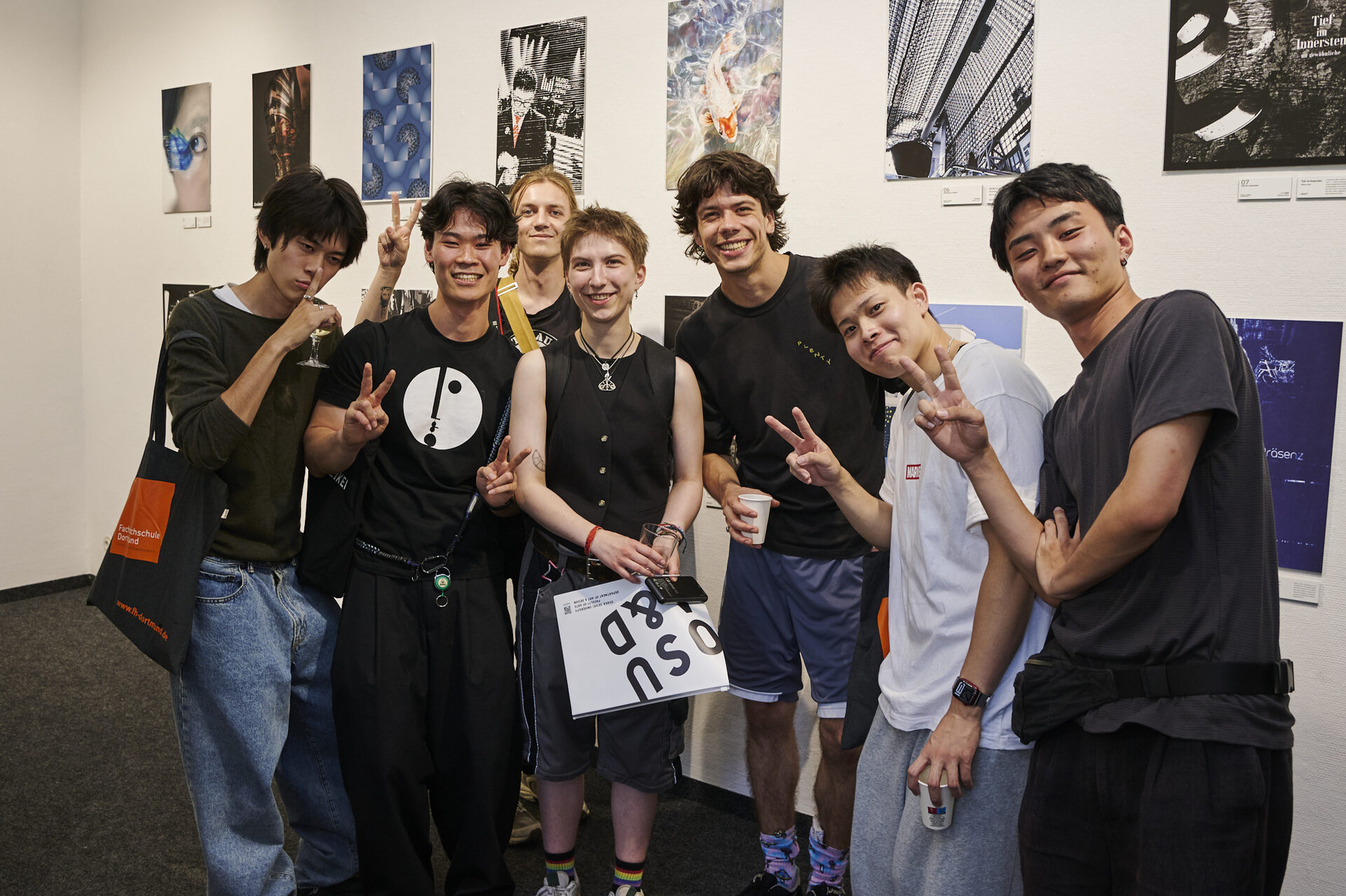
At the outset, we asked the lecturers to mix up the existing teams, since the program was designed as an interdisciplinary format. This exchange gave rise to constructive and stimulating discussions that brought together different perspectives. This had a lasting impact on fostering interdisciplinary dialogue.
How does Japanese design differ from ours?
Japanese design culture strikes me as being particularly shaped by values such as diligence, discipline, and respect. Participating in a seminar within this intercultural context is therefore a unique experience. It allowed us to view our own creative approach from a different perspective and to reflect on our cultural influences.
How do you view the results that came out of this?
Thanks to the intensive scholarly examination of the subject matter in the run-up to the seminar, the artistic concepts were developed on a solid foundation and implemented with art-historical insight. Our colleague Prof. Dr. Lioudmila Voropai brought a cultural studies perspective to the seminar, which added further depth to our discussions. Her expertise helped expand the creative questions to include aspects of cultural theory and connect different levels of analysis.
Our colleague Jens Müller, an excellent designer and a deep expert in the field, gave the discussions a new direction through his broad practical and theoretical knowledge. His design expertise complemented the academic approaches, fostering a productive dialogue between theory and practice. This combination proved to be exceptionally beneficial and was a true enrichment for everyone involved.
This resulted in works that are compelling both in terms of content and design. For all students, the topic offered the opportunity to push their own boundaries and engage with it in a very free and creative way. Each team developed its own unique approach and established its own artistic focus.
For example?
There was a wide range of forms of presentation and interpretation. Various formats were employed, including site-specific installations, photographic works, video works, object-based works, print media, and performative approaches. The combination of these various forms of expression opened up diverse perspectives on the subject and enabled a multifaceted exploration in which visual, material, and temporal dimensions were interrelated.
Where can I see the artworks?
The exhibition is no longer on view in the faculty’s gallery, as the space must be prepared for new projects at the start of the break between semesters. However, the exhibition will be permanently archived through a very well-done catalog—our heartfelt thanks to the entire team—as well as through comprehensive photographic documentation.
We are currently still working on a suitable online solution. We would also like to make the works permanently accessible virtually.